Gut health is the balance of the trillions of bacteria and microbes in your intestines, aka your gut microbiome, and how well your digestive system works.
The gut is important for digestion, immunity, metabolism, hormone regulation, mental health and much more. Symptoms of poor gut health include fatigue, skin problems, frequent colds or food sensitivities.
This Guide is about evidence-based, realistic steps to support gut health, and not fads, detoxes or quick fixes.
What can I do to get rid of my gut problem fast?
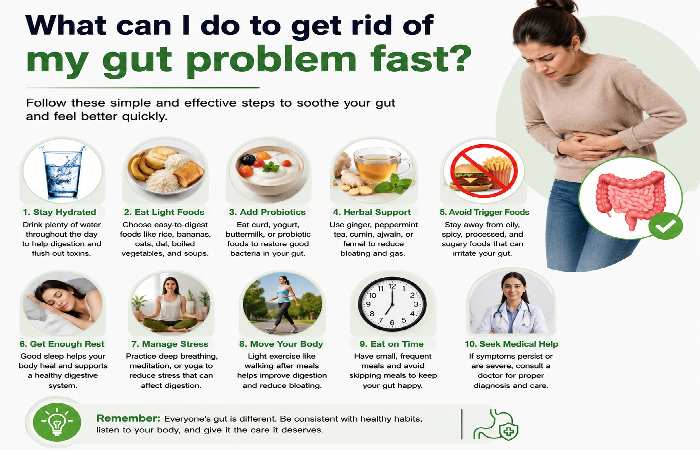
When you are looking to improve gut health in a hurry, you should focus on reducing irritation and promoting good bacteria rather than “detoxing.”
The quickest and safest enhancements are generally those that are implemented through:
Just a few days of simple, whole foods for a few days
Eliminating ultra-processed foods and too much sugar
To improve sleep and reduce stress
Stimulate the digestive process without harming it.
Many people notice within 3-7 days:
Less bloating
Better bowel movements
Weight loss following eating. Weight loss post-meal.
Improvement is not a sign of complete gut healing. It’s about reducing inflammation and rebalancing the body to allow for deeper healing.
How to Detoxify the Gut naturally (without Detoxes)
Your body’s natural detoxification system is the liver and gut. Stress-free cleanses are not necessary.
To naturally clean your gut:
Consume foods high in fibre to aid regular bowel movements
Drink water, so that waste is moved through the intestines
Eat fermented foods to help restore gut bacteria balance.
Steer clear of foods which cause bloating or inflammation.
Natural gut cleaning is about helping the body to digest, not about cleaning it out or starving it.
The importance of gut health!
There are many connections between the gut and almost all the body’s systems.
The research conducted in the past few years also continues to reveal that gut microbiome affects:
Digestion and absorption of nutrients
Immune response ( ~70% of all immune cells reside in the gut)
Inflammation levels
The following are examples of the disorders affecting blood sugar and lipid metabolism:
The gut-brain axis is a signalling pathway between the gut and the brain.
Not all stomach pain is due to poor gut health. It may present as chronic bloating, constipation, brain fog, low energy or recurrent infections.
This Guide is for you if you are: If you are:
Anyone who has any issues with bloating, gas, constipation or irregular bowel movements as an adult.
Individuals recovering from antibiotics or repeated illnesses.
People on a low-carb, low-fat, or vegetarian diet
For those seeking natural, eco-friendly support for gut health, this is the ideal option.
Be careful of certain people.
Individuals with inflammatory bowel disease (IBD), celiac disease or chronic gastrointestinal (GI) disease
Anyone who has lost weight without an obvious cause, blood in stool or severe abdominal pain
People with a long-term medication or pregnant people
Where this is the case, gut strategies should be discussed with a health care professional.
The first step is to optimize gut health by diet (The Foundation).
Eat for Microbiome Diversity
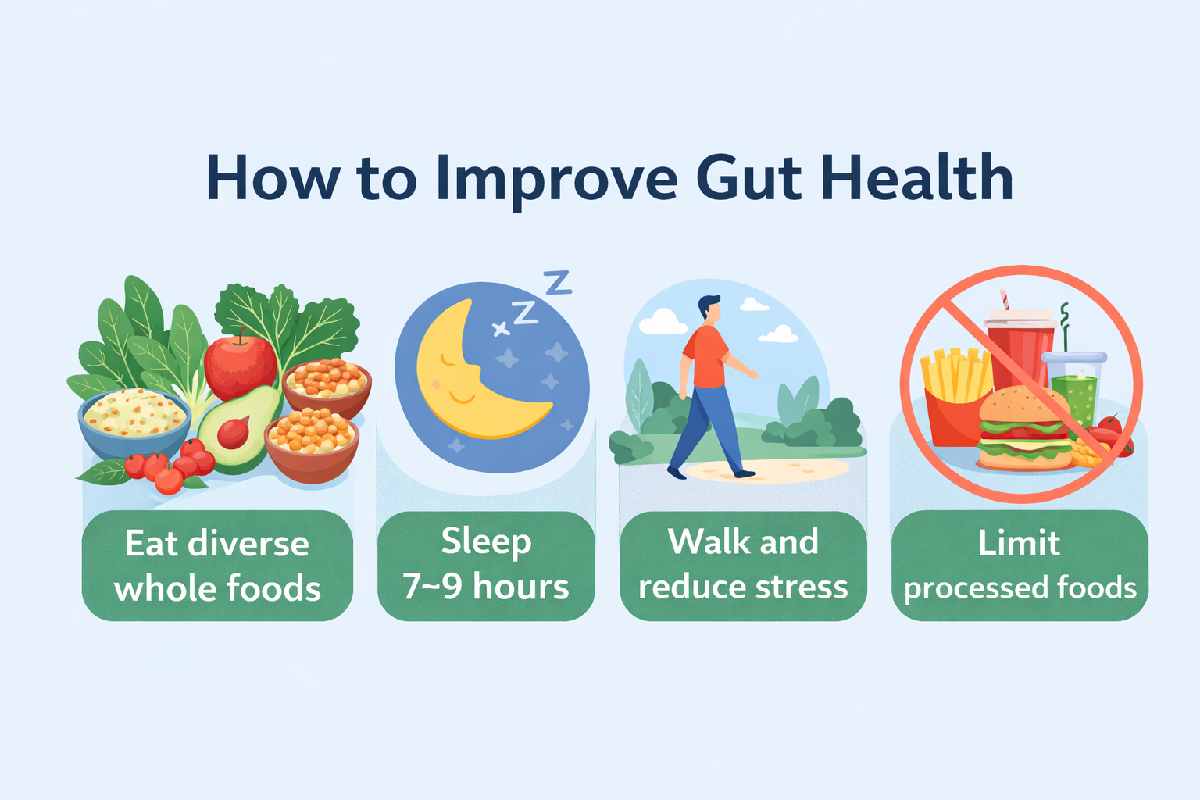
Eating a diverse diet, not a perfect diet, is one of the best indicators of a healthy gut.
In large population studies it has been shown that dietary diversity and a healthy gut microbiome correlate with 30 or more plant foods per week. In large population studies, those who eat 30 or more plant foods a week have greater diversity of plants in their diet and a healthy gut microbiome.
Include a mix of:
Vegetables (leafy greens, carrot, cruciferous)
Fruits (berries, apples, citrus)
Whole grains (oats, barley, brown rice)
Legumes (lentils, beans, chickpeas)
Nuts and seeds
Diversity is a more important concept than elimination of foods.
Increase Fibre Gradually
Very few adults consume the recommended amount of fibre. Fibre nourishes the good bacteria and aids digestion.
Good sources include:
Oats, chia seeds and flaxseeds are all superfoods.
Lentils and beans
Choose apples, pears and sweet potatoes.
Add fibre gradually to avoid gas or bloating.
The second step involves consuming fermented foods regularly.The second step is to include fermented foods regularly.
Fermented foods are good sources of natural probiotics and help to maintain microbial balance.
Examples include:
Yogurt containing live cultures.
Kefir
Sauerkraut and kimchi
Miso and tempeh
Over the last several years controlled trial studies have shown fermented foods can impact the diversity of the microbiome and reduce inflammatory markers within a few weeks.
Start at 1-2 tablespoons daily and slowly increase.
Step 3: Daily Habits to Boost Gut Health
Manage Stress
Chronic stress changes the composition of gut bacteria and slows digestion.
Helpful habits:
Daily walks
Deep breathing or meditation is a technique that can help calm down.
Gentle stretching or yoga exercises
Any consistent short-term stress-reduction activities can help promote communication between the gut and the brain.
The timing of sleep and meals.Meal and sleep timing.
Like the brain, the gut also operates on a circadian rhythm.
Aim for:
7–9 hours of sleep
Regular meal times
Eating small amounts of Food in the evening.
Bad sleep affects the gut bacteria and digestion.
Step 4: Probiotics and Supplements – What Works?
While probiotics may be helpful, they are not a cure-all.
Probiotics can be beneficial when: Probiotics are beneficial when:
After antibiotic use
While travelling with stomach problems
Some IBS patterns (strain-specific benefits)
When the Food is better.When the Food is better.
Improved overall well-being of the gut.
Small amounts of flatulence, or abnormal digestion.
Many probiotic strains do not colonize the gut long-term, which is why diet and lifestyle are more important.
Step 5: Take out Common Gut Disruptors
Wherever possible, restrict these:
Ultra-processed foods
Excess added sugars
Frequent alcohol intake
Use of unnecessary antibiotics or prolonged use of NSAIDs.
These factors lead to a decrease in the beneficial bacteria and an increase in gut inflammation with time.
Common errors that delay healing of the gut.|
Using supplements and nothing else.
Eliminating too many foods too quickly
Avoiding stress and sleep
It may take several days to see results.
Consistency is key, and improvements in gut health typically occur within 3-6 weeks.
Myths vs Facts About Gut Health
Myth Fact
Expensive supplements are not required. Food and lifestyle are more important.
This is because one probiotic is not suited for everyone, and benefits depend on strains and the environment.
It also improves immunity and mood, which are unrelated to gut health.
Detox cleanses heal the gut, but often worsen symptoms.
Best Foods to Improve Gut Health Daily
Diet is the most powerful tool to improve gut health.
Some foods that are always associated with improved gut bacteria are:
Fruits: apples, bananas, berries, grapes, oranges, and any other fruits that are in season.
Fruits: berries, apples, bananas (ripe)
Whole grains: oats, barley, brown rice
Legumes include lentils, chickpeas and beans.
Crunchy foods: celery, carrots, radishes
A wider variety is more important than eating “superfoods.”
The Simple 7 Day Gut Reset (Safe & Realistic)
Daily habits
Use 1 new plant food.
Choose one fermented Food to eat.
Walk for at least 20 minutes.
Drink enough water
Avoid
Skipping meals
Late-night heavy eating
Too much sugar and alcohol.
Within a week, many people may notice that their bloating has decreased and that their digestion has improved.
There are a number of myths about gut health that hinder progress.
Removing misunderstandings makes things more successful.
Common myths:
A detoxification to clean up the gut is necessary.
One probiotic for all.
Gut health is about digestion only.
Facts:
With good support, your gut cleanses itself.
The different kinds of bacteria have various functions.
Your gut is connected to your immune system, skin and your mood.
Conclusion
Improving gut health doesn’t require extreme diets, detox cleanses, or expensive supplements. The most effective way to support your gut is through consistent, simple habits—eating a diverse, fibre-rich diet, including fermented foods; managing stress; sleeping well; and limiting foods that disrupt digestion.
If you’re wondering how to improve gut health, start by fixing the foundation. Small changes made daily often deliver better results than aggressive short-term fixes. Many people notice reduced bloating, better digestion, and improved energy within a few weeks when they stay consistent.
FAQ
1. What supplements help improve gut health?
Probiotics, prebiotics, fiber supplements, and digestive enzymes may support a healthier gut.
2. What should I eat to improve gut health?
Eat fiber-rich fruits, vegetables, whole grains, fermented foods, and lean proteins.
3. How can I improve gut health naturally?
Improve gut health naturally by eating whole foods, staying hydrated, exercising, and managing stress.
4. What are the worst foods for gut health?
Highly processed foods, excess sugar, artificial sweeteners, and fried foods can harm gut health.
5. How can I improve gut health in India?
Include traditional foods like curd, buttermilk, idli, dosa, and fiber-rich vegetables in your diet.
6. What are the 10 signs of an unhealthy gut?
Common signs include bloating, gas, constipation, diarrhea, fatigue, skin issues, and food intolerances.
About the Author
Mohammed Shareef is the founder and content creator behind The Natural Beauty Life, where he writes practical, research-backed content about skincare, haircare, beauty products, and natural wellness routines.
After struggling with gut issues, acne, and sensitive skin personally, Mohammed started documenting his journey and the simple habits that actually helped him heal. His content combines personal experience, ingredient research, and easy-to-follow guidance for everyday readers who want to take control of their health naturally.